
What Happens if You Were Partially at Fault for an Accident in Texas?
After an accident, determining who was responsible is not always straightforward. One driver may have been speeding while another changed lanes without signaling. A property owner may have failed to correct a dangerous condition, while the injured visitor may also be accused of not paying attention. In other cases, several people or businesses may have contributed to the same accident.
If you believe you were partly responsible for your injuries, you may wonder whether that prevents you from seeking compensation in Texas.
The answer is not necessarily.
Texas follows a system known as proportionate responsibility. Under Texas Civil Practice and Remedies Code Section 33.001, a claimant generally cannot recover damages if their percentage of responsibility is greater than 50%. If the claimant is 50% or less responsible, compensation may still be available, but the recoverable damages are reduced according to the claimant's percentage of responsibility.
Understanding this rule can be especially important when an insurance company argues that you contributed to the accident.
What Is Proportionate Responsibility in Texas?
Proportionate responsibility is the system Texas uses to account for situations in which more than one person or entity contributed to an injury.
Rather than treating every accident as entirely one person's fault, responsibility can be divided among the parties involved.
For example, an injured person might be found:
- 0% responsible
- 10% responsible
- 25% responsible
- 50% responsible
- 51% responsible
- Or another percentage based on the evidence
That percentage can directly affect whether the injured person can recover damages and, if so, how much.
Texas Civil Practice and Remedies Code Section 33.012 provides that when a claimant is not barred from recovery, the amount of damages recovered is reduced by the claimant's percentage of responsibility.
This means being partially responsible does not automatically eliminate a personal injury claim.
What Is the 51% Rule in Texas?
Texas's proportionate responsibility system is sometimes referred to as the 51% bar rule or modified comparative negligence.
The basic concept is:
50% or less at fault: You may still be able to recover damages.
More than 50% at fault: Texas law generally bars recovery under Chapter 33.
This distinction can make a single percentage point extremely important.
Someone determined to be 50% responsible may still have a claim, although their damages would be substantially reduced.
Someone determined to be 51% responsible generally cannot recover damages under the proportionate responsibility statute.
How Does Partial Fault Affect Your Compensation?
If you are permitted to recover, your damages are reduced according to your percentage of responsibility.
Consider a simplified example.
Suppose an injured person has $100,000 in damages.
If that person is found:
- 0% responsible: potential recovery would remain $100,000
- 10% responsible: damages would be reduced by $10,000 to $90,000
- 25% responsible: damages would be reduced by $25,000 to $75,000
- 40% responsible: damages would be reduced by $40,000 to $60,000
- 50% responsible: damages would be reduced by $50,000 to $50,000
- 51% responsible: recovery would generally be barred
These examples illustrate the basic mathematical effect of Texas's rule. Actual personal injury cases can involve additional legal and factual issues, including disputes over the amount of damages and how responsibility should be allocated.
Who Determines How Much Fault Each Person Has?
Fault percentages are not necessarily determined simply because one party—or an insurance adjuster—says you were responsible.
When a personal injury lawsuit is tried, the trier of fact, such as a jury, may be asked to assign percentages of responsibility among those whose conduct is properly submitted for consideration.
Before trial, however, insurance companies, attorneys, and the parties may have very different positions about how responsibility should be allocated.
Those disputes can play an important role in settlement negotiations.
The evidence surrounding the accident is therefore critical.
What Evidence Can Be Used to Determine Fault?
The evidence depends on how the injury occurred.
In a vehicle accident, relevant evidence might include:
- Police crash reports
- Photographs of the scene
- Vehicle damage
- Dashcam footage
- Traffic-camera or surveillance footage
- Witness statements
- Skid marks and debris
- Vehicle electronic data
- Cellphone records where legally relevant
- Driver statements
- Accident reconstruction evidence in appropriate cases
For a premises liability accident, the evidence might instead include surveillance footage, photographs of the hazardous condition, maintenance records, inspection records, incident reports, and witness testimony.
Brown & Musslewhite, Ltd., LLP handles personal injury cases ranging from vehicle collisions and commercial accidents to slip and falls, workplace injuries, premises liability, and product liability matters.
What if Both Drivers Made a Mistake?
Both drivers can potentially share responsibility for a Texas collision.
Imagine one driver is traveling above the speed limit while another makes an unsafe lane change.
Determining liability may require evaluating how each driver's actions contributed to the collision rather than simply deciding that one driver was entirely responsible.
Other examples might include:
- One driver following too closely while another stops unexpectedly
- One driver speeding while another fails to yield
- One driver making an unsafe turn while another is distracted
- Both drivers failing to take reasonable precautions under the circumstances
The fact that you may have made a mistake does not necessarily mean the other driver's actions become irrelevant.
The central question is how responsibility should be allocated under the facts and applicable law.
What if You Received a Traffic Ticket?
Receiving a traffic citation after an accident does not necessarily resolve every issue of civil liability.
A police officer responding to a collision may issue a citation based on the information available at the scene. A later personal injury investigation may involve additional evidence that was not immediately available.
That might include:
- Video footage
- Additional witnesses
- Electronic vehicle data
- Photographs
- Phone records
- Accident reconstruction
- Evidence concerning another driver's conduct
Do not automatically assume that receiving a ticket means you are legally prohibited from pursuing an injury claim.
The entire accident should be evaluated.
What if the Police Report Says You Were at Fault?
Similarly, a police report can be an important piece of information without necessarily being the final determination of responsibility in a civil personal injury case.
An officer typically arrives after the accident has occurred.
The report may reflect statements from the drivers and witnesses, physical evidence at the scene, citations, and the officer's observations. But other evidence may later provide additional context.
If liability is disputed, the investigation should extend beyond a single document.
Can an Insurance Company Blame You for the Accident?
Yes.
Because an injured person's percentage of responsibility can directly reduce—or potentially eliminate—the amount recoverable under Texas law, fault can become a significant issue in insurance negotiations.
An insurer may argue that you:
- Were speeding
- Were distracted
- Failed to keep a proper lookout
- Followed too closely
- Failed to yield
- Ignored a warning
- Contributed to a dangerous situation
- Could have avoided the accident
- Otherwise contributed to your own injuries
Those allegations should be evaluated against the evidence rather than automatically accepted.
An insurance company's position on liability is not necessarily the final legal determination of fault.
Should You Give the Other Insurance Company a Recorded Statement?
After an accident, another party's insurer may contact you and ask questions about what happened.
Be careful about making statements regarding fault before you fully understand the circumstances.
A seemingly casual answer such as “I didn't see them” or “maybe I could have stopped sooner” could potentially become part of an insurer's argument that you contributed to the collision.
You should also avoid guessing when you do not know the answer to a question.
If liability is disputed, speaking with a personal injury attorney before providing detailed statements to another party's insurance company can help you understand your options.
What if You Apologized After the Accident?
People sometimes apologize immediately after an accident even when they do not actually know who caused it.
Someone may say:
“I'm sorry.”
“I didn't see you.”
“I should have been more careful.”
Those statements may later become part of the evidence surrounding the accident.
However, one statement does not necessarily establish the complete allocation of responsibility.
Physical evidence, witness accounts, video, traffic laws, and the actions of everyone involved may also matter.
Rather than trying to determine fault at the scene, prioritize safety, medical attention, exchanging necessary information, and documenting what happened.
Can More Than Two Parties Share Responsibility?
Yes.
Some personal injury cases involve several potentially responsible parties.
This is especially important in truck and commercial vehicle accidents, where the conduct of more than just the individual driver may need to be investigated.
Depending on the circumstances, potential parties could include:
- A driver
- An employer
- A trucking company
- A vehicle owner
- A maintenance company
- A contractor
- Another motorist
- A product manufacturer
- A property owner
- Another business or individual whose conduct contributed to the injury
Texas law's definition of a “responsible third party” encompasses persons alleged to have caused or contributed to the harm through negligent acts or omissions, defective or unreasonably dangerous products, or other conduct violating an applicable legal standard.
Identifying every potentially responsible party can therefore be an important part of investigating a serious accident.
How Does Partial Fault Work in a Truck Accident?
Truck accident cases can become particularly complicated because multiple parties and multiple forms of evidence may be involved.
For example, an insurance company might argue that an injured motorist contributed to a collision by changing lanes improperly.
At the same time, evidence might show issues involving the commercial driver or trucking operation, such as:
- Speed
- Following distance
- Driver distraction
- Driver fatigue
- Vehicle maintenance
- Loading or cargo issues
- Company practices
- Other safety concerns
Brown & Musslewhite has represented clients in trucking and commercial vehicle cases, and the firm's published results include settlements and verdicts involving those types of accidents.
A thorough investigation can help determine whether responsibility extends beyond what appeared obvious immediately after the crash.
Does Partial Fault Apply to Motorcycle Accidents?
Motorcyclists can also face allegations that they contributed to a collision.
An insurer might claim that the rider was speeding, improperly passing, difficult to see, or otherwise partly responsible.
The same basic Texas proportionate responsibility rules can become relevant when evaluating negligence claims arising from a motorcycle accident.
Evidence such as vehicle positions, roadway markings, witness statements, surveillance footage, helmet or motorcycle cameras, and vehicle damage may help establish what actually occurred.
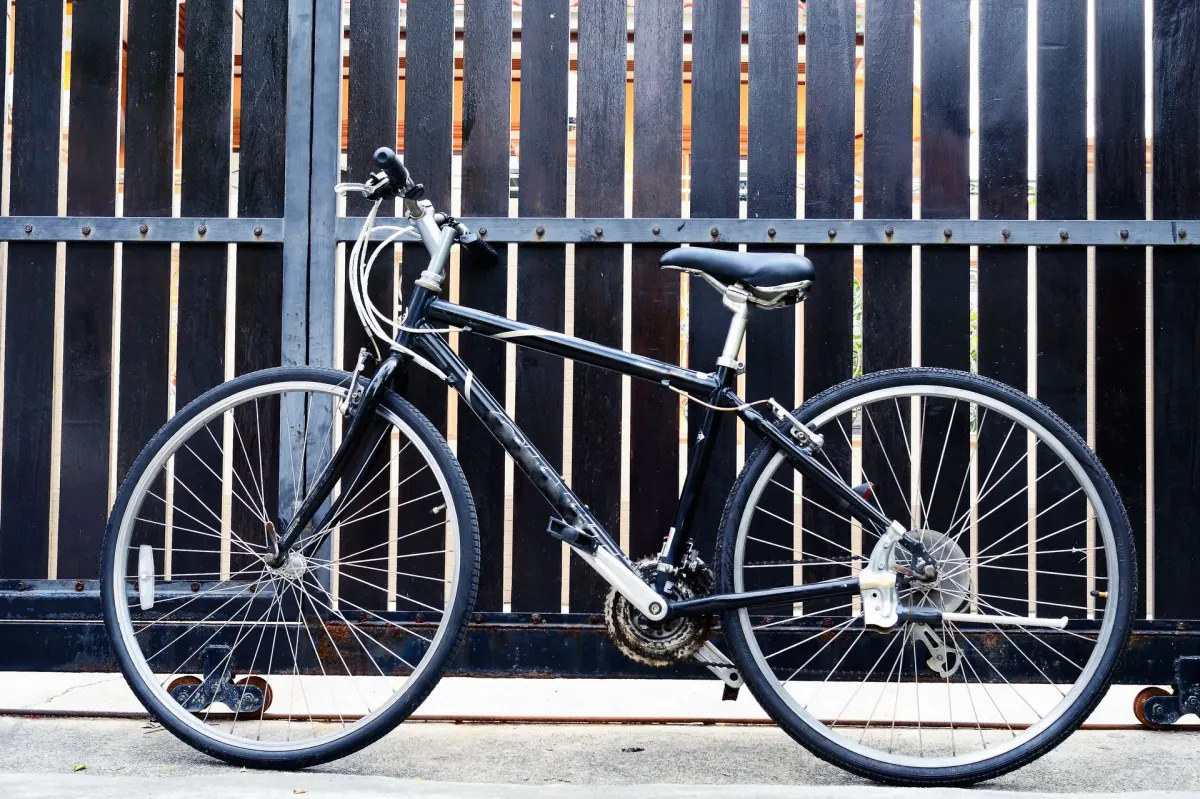
What About Bicycle Accidents?
Bicycle accidents can also involve disputed responsibility.
Drivers and bicyclists both have obligations under Texas traffic laws, and the circumstances of a collision may need to be carefully reconstructed.
Brown & Musslewhite represents injured cyclists as part of its Houston personal injury practice.
If an insurer argues that the bicyclist contributed to the accident, that allegation does not necessarily end the claim. The percentage of responsibility must still be evaluated based on the facts.
Can You Be Partially at Fault for a Slip and Fall?
Potentially.
Partial responsibility is not limited to motor vehicle accidents.
In a premises liability case, a property owner may argue that an injured visitor:
- Was not watching where they were walking
- Ignored an obvious condition
- Entered an area they should not have entered
- Was distracted
- Otherwise contributed to the accident
At the same time, evidence may show that the property owner or occupier failed to address a dangerous condition.
Brown & Musslewhite's premises liability practice includes accidents involving conditions such as inadequate lighting, walkway obstructions, damaged flooring, loose stairs or handrails, uneven stair risers, and slippery floors.
Determining responsibility requires evaluating the conduct of the parties and the circumstances surrounding the hazard.
Does Partial Fault Apply to Product Liability Claims?
Texas Chapter 33's proportionate responsibility framework can apply broadly to causes of action based on tort, including certain product liability matters, although the specific rules and defenses depend on the type of claim.
Product liability cases can involve allegations against manufacturers, sellers, distributors, or others connected to an allegedly defective product.
Brown & Musslewhite handles product liability claims involving injuries allegedly caused by unsafe or defective products.
These cases can involve complicated questions about the product itself, warnings, design, manufacturing, use, and the conduct of multiple parties.
What Damages Could Be Reduced Because of Partial Fault?
When proportionate responsibility applies, the reduction affects the damages recoverable on the claim.
Depending on the circumstances of a Texas personal injury case, claimed damages might include losses involving:
- Medical expenses
- Lost income
- Reduced earning capacity
- Physical pain
- Mental anguish
- Physical impairment
- Property damage where applicable
- Other legally recoverable losses
The types and amounts of damages available depend on the facts of the individual case.
After determining the damages, the claimant's percentage of responsibility can affect the final amount recoverable under Section 33.012.
What if You Think the Accident Was Partly Your Fault?
Do not automatically give up on a potential personal injury claim.
People involved in accidents often make assumptions before all the evidence is available.
You may believe you were responsible because:
- You did not react quickly enough
- You were distracted for a moment
- You received a ticket
- You apologized at the scene
- An insurance adjuster blamed you
- Another person insists you caused the accident
None of those facts alone necessarily determines the final allocation of responsibility.
There may be evidence showing that another person or business also contributed significantly to what happened.
How Can a Personal Injury Attorney Help When Fault Is Disputed?
When responsibility is contested, a personal injury attorney can investigate the accident rather than relying solely on an insurance company's version of events.
Depending on the case, that may involve:
- Reviewing police or incident reports
- Obtaining photographs and videos
- Identifying witnesses
- Reviewing medical documentation
- Preserving surveillance footage
- Investigating vehicle or commercial records
- Examining applicable safety rules
- Identifying additional responsible parties
- Evaluating allegations that the injured person contributed to the accident
- Negotiating with insurers or pursuing litigation when appropriate
The objective is to understand how the accident actually happened and how responsibility should be allocated.
Don't Assume Partial Fault Means You Have No Claim
Texas law does not require every personal injury claimant to be completely free from fault.
Under the state's proportionate responsibility system, an injured person who is 50% or less responsible may still be able to recover damages, although the amount is reduced according to their percentage of responsibility. A claimant whose responsibility is greater than 50% is generally barred from recovery under Chapter 33.
That makes the evidence surrounding fault extremely important.
Before assuming you cannot pursue compensation because you may have contributed to an accident, it is worth determining what the available evidence actually shows.
Partially at Fault for an Accident in Houston, Texas?
If an insurance company says you caused or contributed to an accident, that does not necessarily mean you have lost your ability to pursue compensation.
Brown & Musslewhite, Ltd., LLP represents personal injury victims in Houston and throughout Texas in cases involving auto accidents, truck and commercial vehicle accidents, motorcycle and bicycle accidents, slip and falls, workplace injuries, premises liability, product liability, medical malpractice, offshore injuries, and other serious injury claims. The firm offers free consultations and handles personal injury matters on a contingency-fee basis.
If fault is disputed, investigating the evidence and understanding Texas's proportionate responsibility rules can help determine what options may still be available.